
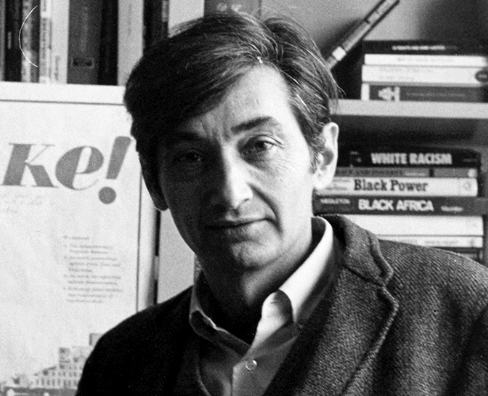
Howard Zinn: Race, America, and class
Here are two videos of Howard Zinn, the author of the book, A People’s History of the United States, among many others. The first video is on Race in America (5 mins) and the second one on A People’s History of American Empire, that he gave in 2008 right after Obama was elected as the US president. The second video is 52 minutes long – try to watch maybe the first 20 mins if you can’t watch it all. What are your takeaways of these videos? Do you agree with the points made by Professor Zinn? What resonated with you the most? Is there any point he made that you don’t agree with? If yes, why? Respond to my post and/or respond to each other as you see fit. (11/7)


I found Howard Zinn’s videos to paint an accurate picture of the world today even though the videos were made in 08′ and 12′. I actually found it quite funny when the girl asked the question about how will people perceive the Hurricane Katrina situation 20 years from now and in 8 years we will be there, yet America is still the same. If another Hurricane Katrina happened, we would be in the same position as in 2008.
Something Howard Zinn spoke about in the second video about dismantling the military’s budget and giving aid to other countries or our country and no longer being a military superpower but being a humanitarian super power really stuck out to me. Here is a chart that shows the military budget compared to 11 other countries https://www.pgpf.org/chart-archive/0053_defense-comparison. Just a tiny portion of the military’s budget would help so many people. Yet so many people believe that the military is the forefront of our country and if we take that away we have nothing. However, many people in our country have little to nothing and some of those people are members of the armed forces.
I have not read A People’s History of the United States but it is on my list as well as, You Can’t be Neutral on a Moving Train.
I agree with Yanci that Zinn’s videos accurately capture many social justice issues in the United States and especially in how the United States relates to the rest of the world through foreign policy. It was interesting seeing how his words came across this many years on from the Obama administration and the excitement so many of us felt when Obama was first elected. I strongly agree in particular with the comments Zinn made on a single-payer health system and the need for universal healthcare in the US, and the shortcomings of what became the Affordable Care Act when it comes to eradicating private insurance companies and making quality healthcare available to everyone.
I also agree with his criticism of the military budget and the amount of money that could be spent on other, more socially beneficial government programs if it weren’t wasted on developing and maintaining an enormous military (both in the States and overseas). I have worked with a number of students who are veterans, and the high prevalence of issues like PTSD was shocking to me at first – especially in veterans under 30 years old. As a nation the US spends this enormous amount on the military, and yet the individuals who serve are not treated as valuable – especially not once they are back home from violent situations in which they’ve been used as disposable pawns (in my opinion). When I link this with what Zinn was saying in the first video about economic equality and the role of the corporate system, I see a lot of parallels in the way the military operates (making new aircraft carrier models just to sell them to other countries, for example) and how individuals are viewed as resources to be exploited in all of these systems. A side note, perhaps, but I have also marveled at the way military bases in Alaska are always surrounded by box stores and fast food chains – it’s interesting to me the ways in which these “symbols” of American capitalism follow the military.
“We bother people around the world and we create terrorists.”
A lot of quotes from the second video really stuck out to me, but this one, and this repeated idea, stuck out the most. I agree with Howard Zinn on what he said about our military and our military power. I’ve always found it strange that we’re the only country in the world that still has a large amount of military bases in other countries. Is that not another form of colonialism? Howard Zinn mentioned that if you bother enough people, thousands of people, there will be a select few who become polarized against you and that’s where terrorism comes from. And that’s very true in the case of the United States. 9/11 happened because of our foreign policy in the Middle East. If we had been, as Yanci pointed out, a humanitarian super power instead of a military super power, would 9/11 still have happened?
The two videos were definitely interesting, and I would like to see more people in politics talk like he does. The idea that we can cut the military budget in order to fund social programs that help, rather than hurt, is one that I can get behind completely.
I agree with the points that Yanci and Mollie mentioned above. The U.S. spends a lot of their budget on the military and I feel that a lot of the that money could go into different programs such as helping the homeless or improving the education system in public schools. One point that stood out to me was Zinn questioning if war actually solves problems and we, as the U.S., should get out of the mentality that it does. This reminded me of a comment that one of my classmates in my Chinese class raised, which was why go to war if we can use our words to try to negotiate with different countries. We shouldn’t use war as a threat every time things don’t go are way, especially since the consequences of fighting a war isn’t always good.
Mollie’s point on veterans not being treated as valuable once they return home also reminded me of how a lot of veterans have mental health issues that go untreated and for some, they end up being homeless. KTLA, a Los Angeles news station, recently did a segment (https://ktla.com/news/local-news/cleanup-of-veterans-row-encampment-begins-after-va-says-it-will-house-homeless-vets-outside-west-l-a-campus/) on some homeless veterans receiving temporary shelter in West L.A. Beyond receiving temporary housing, I would be interested in learning about other types of services these veterans will receive to help them transition into finding work and even permanent housing.
Hi Sharon and everyone, thank you for sharing those resources and your thoughts. I also found those two videos interesting because there are so many elements in it and we can see the intersectionality of race and social class.
I came from a communist country, and to me, Howard Zinn’s ideas are really similar to Marxism: he values economic very much and believes that government should take the responsibility of providing housing, healthcare and jobs. I think I agree with you all about government’s duty in redistribution of wealth, build a better healthcare system and promote social justice. Also, I agree with Zinn that we shouldn’t view wars/militarisms as a way to solve problems and should focus on more domestic social/economic problems. It reminds me of a Chinese word called “和平崛起”(peaceful rise/development), it may sounds like a propaganda but I still like this concept because it focus a lot on people’s welfare, economic development and no war.
I have read parts of ‘A People’s History of the United States,’ but it is a book I’d really like to sit down and read in its totality. I took a class in undergrad called A People’s History of the Arab World based on Zinn’s work, and it was a fascinating premise through which we engaged with colonizing and imperializing histories as they pertain to the Arab World from often ignored perspectives. Also, a fun aside— ‘A People’s History of the United States’ is mentioned in the film Good Will Hunting when Robin Williams recommends it to Matt Damon! Williams’ character says something to the affect of, “Want to read a real history? That book will knock you on your ass.” Given the dominant American discourse, I think Williams’ line is probably accurate. Challenging the world views we grow up internalizing can be a very life altering experience.
One thing Zinn touched on in the first video was the change in legality surrounding racism. I think he took a very realistic stance here in that yes, the legal system that supported blatant racism has been dismantled, but racism most definitely still exists and is supported by our economic and social systems. A common argument I heard a lot after the murder of George Floyd in condemnation of the BLM movement was that racism doesn’t exist in a systemic way because it is no longer legal thanks to the Civil Rights Movement and the election of Obama. I find this argument to be short sighted and ignorant of the very disproportionate impact of climate change, economic challenges, and access to social services that BIPOC folks experience daily. Zinn’s comments on Obama and how much change he will try to undertake are an example of this. A Black man would not have been elected president if he called for the shutting down of overseas military bases. He still had to play into the respectability politics that American society demands of people of color, despite his prominent position.
I also want to touch on the comments that the woman who introduced him in the second video made. She noted that Dale McCartney wrote that Zinn, “favors an openly political stance that reclaims histories of oppressed peoples.” I found this fascinating given our conversations on the myth of neutrality. Telling the often untold side of history is seen as political because we have codified and normalized the victor’s perspective as dominant and “true,” whatever that means. Any challenge to that discourse is a political act.
His comments on terrorism in the second video were particularly interesting, given his focus on the international sphere. Terrorism is such a complex subject and has so many definitions, but the America we live in today sees so much domestic terrorism that if we only focus on the international aspect of it, terrorism becomes a problem of people far away. It falls into the tired rhetoric of them versus us, or they hate us because of our freedom. ‘They’ almost always referring to brown Muslims.
Finally, his comment about the American people being underestimated really stood out to me. Personally, I can get a bit pessimistic and focus only on the negatives of American discourse, but I think I am participating in an underestimation of the American public when I do that. Yes, we have a long way to go in terms of fighting for social justice, but so much has improved and so many more people are having open conversations condemning racism, sexism, classism, ableism, colonialism, imperialism, the list goes on. While perhaps generational and specific to physical locale, Americans are starting to question the foundations upon which the United States is built and I think that is something worth highlighting more than I probably do.
For the “Race in America” video, it made me think of James H. Cone’s book “Malcolm and Martin and America,” which talks about how in the popular media and in the retelling of history since the assassinations of both men in the late 1960’s, MLK, Jr. is positioned as the champion of the American Dream and Malcolm X as the standard bearer of the American Nightmare. In reality, both men had far more in common philosophically and politically, and were moving ever closer in those positions when their lives were tragically and violently cut short. At the ends of their lives, both men were highlighting the need for both economic and racial justice and were also synthesizing integrationist and nationalist philosophies.
The other point that Zinn made about the government needing to provide housing and employment due to the private sector’s inability and refusal to do so, has only once before been fulfilled by the U.S. government (that I can think of at least at a countrywide scale): during the New Deal period and F.D.R.’s administration in the 1930’s and 1940’s. The CCC, WPA, CWA, NYA, TVA, and other government-run and funded employment programs (referred to as “boondoggles” by some misanthropic Republicans) offered employment to people of all races during the depths of the Great Depression (one thing I need to research is what percentage of the managerial or non-frontline workers, and therefore better paid, were folks of color).
Regarding the second video, I agree with Zinn’s cautioning people to wait and see what policies the newly elected Obama administration was going to pursue, and not just assume that everything that he would prioritize would be progressive in nature. It turned out the Obama administration had a mixed record over its eight years. Some of the positives were the passing of the ACA/Obamacare; Lily Ledbetter Fair Pay Act; same-sex marriage; the end of Don’t Ask, Don’t Tell; and the appointment of Sotomayor and Kagan to SCOTUS. Some of the negatives were mass deportations of those in the U.S. without documentation and the increase in drone warfare and deaths by the U.S. in several countries. While I strongly disagree with the deportations and the death wrought on civilians by drones, I do think that the country, overall, moved in a far more progressive and positive direction during Obama’s time in office. I am curious about other folks’s perspectives or thoughts–especially from an international perspective.
I do think there is wisdom in Zinn’s counterargument that if the U.S. were to close military bases around the world (or some of them), we might increase our national security as it could decrease tensions, resentments, or ill will directed at the U.S. from external actors (Paraphrase: You bother people in another country, and they are more likely to become upset with you and want to attack you.). However, as a child of the Cold War (admittedly at the tail end, but the Cold War nonetheless) and growing up as a part of the hegemon, my only hesitation in advocating for a wholesale closing of U.S. military instillations around the globe, is the reality that power abhors a vacuum, and that the U.S.’s absence means another power/entity will move in. I realize that things could potentially improve dramatically, but understanding that there are bad actors in the world, I am hesitant to say that the U.S. should close all of its military bases. U.S. military personnel who commit crimes and abuses while serving overseas must absolutely be held accountable, and local communities where U.S. bases are located must be able to say if they want such an installation in their community.
I agree with the comments everyone has made about Zinn’s points in these videos. The following quote from the second video especially stood out to me: “Powerful economic interests stand in the way of bold economic changes.” I think this is a great way of summarizing why it is so difficult to make large-scale changes in this country. Our political system and bipartisan politics immediately come to mind. While the Republican party absolutely has a lot of corruption when it comes to campaign finances, I think Zinn was right in recognizing that the Democratic party is subject to corruption as well, as both parties are backed by powerful corporations that have a say in which policies/agendas are prioritized.
And while I appreciate Zinn’s notion that bold economic changes will require radical action from our country’s leaders, I also question the reality of this idea. Regarding the 2008 election, I think race was a big factor as well, and I am surprised that Zinn did not touch on it more in his opening comments (and I admit that I did not watch the entire video, so I could have missed it). I do not think it would have been so easy for Obama to “just do it” and push more radical policies, especially considering his positionality as our first Black President. I imagine that he would have encountered very strong opposition from both parties in the other branches of government. And, if he had campaigned on a more radical platform, he may have been entirely dismissed and not won the election, which in my opinion would have been worse. So as much as I don’t like it, I see the benefits of “playing it safe.”
I think this tension between bringing about change and cooperating with systems that are already in place is very interesting, and I am so curious what my classmates’ thoughts are. I’m reminded so much of Ann’s wonderful conversation with our class, and how she struggles with wanting to completely destroy the education system while also needing to cooperate with it to a certain extent. I wonder how I will need to create that boundary for myself in my future job!
Kira,
I like your perspective on the “balancing act” we have to do in our daily lives, and that Obama was also subject to doing during his terms as President. The insurrection happened because… joe Biden won the 2020 election. After all the racial torment he and his family were subject to regardless of his actions/inactions, I feel if he tried to be more “radical” than he was, we likely would’ve heard news of more assassination threats (or worse).
I completely agree, Jada! Thanks for pointing that out
My main takeaway from watching these two videos is that there isn’t an excuse for people to ignore the issues of race in the United States. We need more White Americans (or just White people generally speaking) working to help educate and shift the mindsets of people in a variety of different areas. The amount of people that are aware of racism and all of its effects, especially the ones that occur overtime/are multi-generational, is much higher than most people are led to believe – but the reasons why these people “hide” their understanding is because, deep down, they don’t want to admit that they don’t want to change things because they see this type of change as taking away from them individually… which then forces people to confront the fact that they might actually embody racism.
One thing I don’t necessarily disagree with is how he describes the issue of fixing the impoverished population – he’s not wrong when he says this, but this language has to be carefully spread so that people don’t misinterpret it as “Black people are helpless and THAT’s why we need to end racism”.
I like the points that he made about the type of healthcare that people in the military get, and how he basically implies that the only people who are worthy of being treated like people are members of the military. I think it’s hilarious that members of the US military are hailed as these people who can “handle anything”… yet a lot of people consistently fight against budget cuts for them to better, literally, the people they’re “sworn to protect”.
Regarding the video Howard Zinn on Race in America, I thought it was interesting that he mentioned Obama and MLK – two obviously critical figures, but who also sometimes can be used as oversimplifications of Black people in general because of their status and eloquence, a trait so valued by white folks. It was interesting to hear him talk about economic injustice and healthcare inaccessibility as two crucial systems that need attention in order for change to happen. As someone who doesn’t feel like I want to be involved in policy proposals, it is hard for me when we have identified problems that obviously need attention, and yet so little progress has been made. I sometimes feel powerless against these giant systems, like the only thing I can do is vote, and yet now we have a Democrat in office and virtually nothing to show for it. I feel discouraged after only 10 years of voting, I can’t imagine how someone like Bernie or Howard must have felt after decades without seeing the changes they wanted. I guess it’s the small wins?
Regarding his opinions after the election, it seems interesting that he knew in advance Obama wasn’t going to make as much change as he promised. I hear what he is saying when he says he wasn’t heartened by Obama being cautious in the campaign, but I don’t know if he had the luxury to speak his mind when he was already navigating such intense racial dynamics. Even Bernie, who did not have the challenge of race against him, was never elected, possibly because he spoke too openly about his beliefs during the campaign and scared people off.
As a random side note, there is a bridge in my town that was created by the Works Progress Administration during the New Deal, and I’ve always thought it was amazing.
I couldn’t agree more on slashing military spending. I have always thought it was mortifying to think of how much money we spend on the military. The other day during my Power & Identity workshop, an NPTS student informed me of how many nuclear weapons the U.S. has compared to other countries, and it was horrifying. My mom raised me when I was a kid during the era of the beginning of the Iraq war by teaching me about peace and about the Vietnam war protests. My grandpa suffered from PTSD after serving in the war, and became an alcoholic. That caused echoes of pain in our family and I have recently recognized that is what guides my values regarding war and peace.
Prediksi Harian
prediksi Hoki
Prediksi Harian
prediksi Hoki
Prediksi Harian
prediksi Hoki
Prediksi Harian
prediksi Hoki
Prediksi Harian
prediksi Hoki
Prediksi Harian
prediksi Hoki
Prediksi Harian
prediksi Hoki
Prediksi Harian
prediksi Hoki
Prediksi Harian
prediksi Hoki
Prediksi Harian
prediksi Hoki
Prediksi Harian
prediksi Hoki
Prediksi Harian
prediksi Hoki
Prediksi Harian
prediksi Hoki
Prediksi Harian
prediksi Hoki
Prediksi Harian
prediksi Hoki
Prediksi Harian
prediksi Hoki
Prediksi Harian
prediksi Hoki
Prediksi Harian
prediksi Hoki
Prediksi Harian
prediksi Hoki
Prediksi Harian
prediksi Hoki
Prediksi Harian
prediksi Hoki
Prediksi Harian
prediksi Hoki
Prediksi Harian
prediksi Hoki
Prediksi Harian
prediksi Hoki
Prediksi Harian
prediksi Hoki
Prediksi Harian
prediksi Hoki
Prediksi Harian
prediksi Hoki
Prediksi Harian
prediksi Hoki
Prediksi Harian
prediksi Hoki
Prediksi Harian
prediksi Hoki
Prediksi Harian
prediksi Hoki
Prediksi Harian
prediksi Hoki
Prediksi Harian
prediksi Hoki
Prediksi Harian
prediksi Hoki
Prediksi Harian
prediksi Hoki
Prediksi Harian
prediksi Hoki
Prediksi Harian
prediksi Hoki
Prediksi Harian
prediksi Hoki