
understanding my privilege
I grew up in a well-educated middle-class family in China, and my grandfather was the first-generation college student after the Cultural Revolution. Both of my parents went to college, thanks to them, I developed good learning habits and got interested in learning. They support me both mentally and financially. They are busy at work, but we do have conversations weekly. They are always there whenever I need help: during my freshman year, I was bullied, struggling with my mental health, and my mother got a national therapist license just to aid. Without them, I would never become who I am now. It is a privilege to be born in this family, receive public education and even have the chance to go abroad for further study.
I was raised in a highly homogenous society and race wasn’t a huge issue in China because everyone has the same skin color. Naturally I didn’t pay much attention to racism until I came to the US 2 years ago. I read the news and started to know what racism is, how the situation is when hate crimes happened. I think I am also privileged compared to those African Americans, Asian Americans, and other group of people since I spent most of my life in China, therefore, I didn’t experience as much racism as they do, and I wasn’t treated unequally due to my skin color.
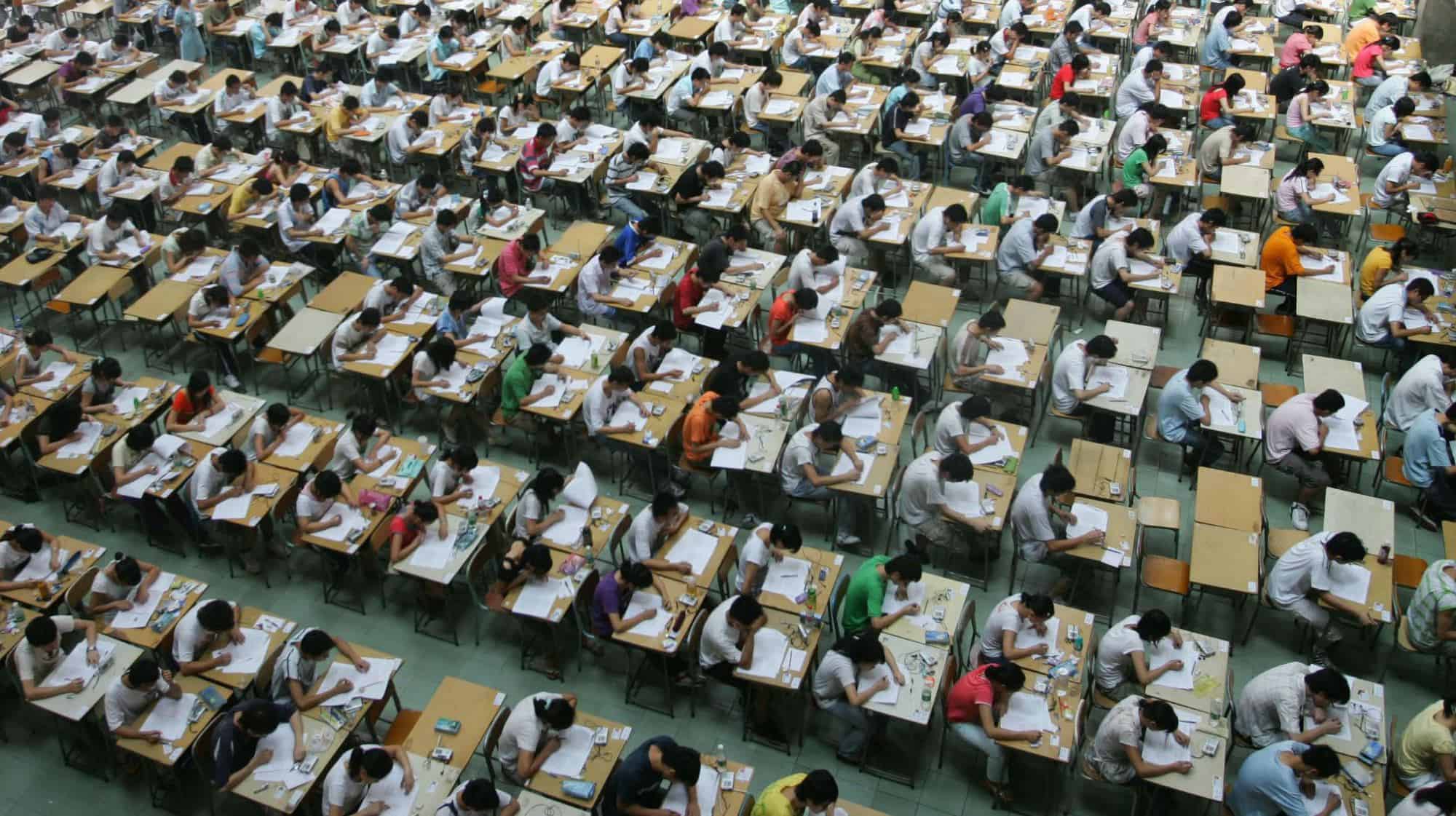
I can’t say these support systems are distributed equally in the society I grow. Only 8.86% of Chinese population go to college and not everyone can afford college tuition. Also, not every family value education as my family does (I know someone who quitted because their family believed that it was a waste of money/time to go to school). Education also varies if you have different social economic status. I used to work in a private international high school, and I was shocked that they can hire STEM teachers who had Ph.D degrees to teach. They also had summer camps, robot competition, theatre clubs, which I have never heard of. But I am grateful for the fact that I went to public schools, and even for public schools, not everyone is bestowed with this opportunity.
I am fully aware that the support system is not perfect (in both China and US society), and this is why I want to take this course. I do want to make a difference in my classroom, to create a safe and equal space for all my students, to expose them to resources that they may not get access to on their own, to guide them develop study habits and to self-educate themselves.


Dear Mujun, thank you for sharing your story. It’s so amazing that your mother got a therapist license to help you. How are people’s attitudes toward mental health in China? In the US there has been stigma but I think it is getting much better. I also struggled with mental health and my parents went above and beyond to support me. My mom was a first-generation college student too. I still rely on my parents for emotional support and some financial support. It’s so true that we wouldn’t be where we are today without our parents.
I was shocked to read that such a small percentage of Chinese people go to university. There is a stereotype that Chinese people place great importance on studying, much more than Americans. Now I realize this is not necessarily true. Thank you for opening my mind. I also went to public school and am grateful for the opportunity. It is a huge shame that there is such a divide in educational opportunities depending on one’s family’s economic situation. I can’t help feeling that private schools are a bit unethical.
Dear Zoya, I think most of people in China don’t pay much attention to mental health and there is also stigma against those who suffer from mental health. And people who struggled with mental health are also underrepresented and they don’t talk about it much since they don’t want to be categorized as “mentally weak” by the public.
To me, private school students can get access to resources while others from a lower social economic status can’t. The readings also mentioned how textbooks themselves are commercial commodity which not everyone can afford. I guess what teachers can do is to be less dependent on the textbooks and provide students with more free resources.
Hi Mujun, thanks so much for sharing this insightful reflection. I really appreciated having the chance to read your thoughts about the education system in China. Like Zoya, I was surprised to see that such a small percent of the Chinese population goes to college — this made me curious about the percentage of the American population that goes to college to put this number into perspective; when I did a quick Google search, a few different sites suggested that between 35 to 45 percent of American have a college degree (I actually thought it would be fewer). I noticed you said that cost and attitudes toward higher education are factors affecting that number; I think those are two big reasons that people in the United States have for not attending college as well (actually, I think they go together at times. I remember questioning the value of continuing my education and wondering if the high price tag would be worth the outcome). I also think it is amazing that your mom got a therapist license to support you — this definitely shows how much she cares about you, and I’m glad you have a strong emotional support system in your parents. I, too, feel so lucky to have had strong familial connections to rely on throughout my life.
Dear Stephanie, thank you for your comment and the data about the percentage of Americans who go to college. Also, from the photo you showed us, I can feel the strong familial connections that you have with your family. Now I feel blessed to have those familial connections, they are unconditional and always a source of support whatever happened.
Hi June, thanks for being vulnerable and sharing your story with us. I’m glad to hear that you were able to get support when you were struggling with your mental health. While reading your post, I was shocked that only about 8.86% percent of the Chinese population attend college. Growing up in my community, often times there is the stereotype present that the majority of Asians/ Asian Americans attend higher institutions and end up living a comfortable lifestyle, but that’s not true considering that access to resources aren’t evenly distributed across different communities.
I’ve heard from some of my friends that certain private schools in LA prefer to hire teachers with Ph.D.’s, rather than individuals who have master’s or bachelor’s degree. Therefore, there is a belief that students are getting “better” education just because the instructor has the highest degree title. I’m wondering if this is also the case in schools in China. If parents know that certain private school or public schools have teachers who are Ph.D. holders, would parents try to get their child into that school?
Hey Mujun,
I loved reading your reflection. There’s this common theme of people realizing that they grew up in “bubbles” where you’re shielded from knowing about and/or experiencing different types of discrimination. I definitely feel this way about my adolescence, but I only realized most of what I know now from being an adult.
My family values education, but in a practical sense: so long as you can find a way to (legally) financially sustain yourself, you can do whatever you want. I *technically* am a first-generation college student since neither my grandparent or parents have a four-year degree (my mom has a two-year degree), and I’m definitely the first in my family to pursue a master’s degree. I think it’s interesting that our families can have very similar values, yet they influence us individually in different ways.
June – thank you for this candid reflection. Familial support is certainly a privilege! I am curious about the context in China actually. Turkish people also believe that there’s no racism in Turkey because we are – more or less – the same color. However, Turkey is still a racist country. It’s not racism against Black people – or it’s not the kind of racism we know in the States – but it’s a different form. It’s against Kurds, Armenians, and everybody else who is not a self-identifying Turk. So racism is more about ethnicity than skin color and ethnicity itself is a funny concept because it’s to some extent about culture but Turks claim to have “pure blood” – as if that were possible! Anyways – I wonder how you would consider the situation in China in light of this information?
Thank you Deniz for sharing Turkish racism. If the racism also applies to ethnicity minorities than I guess some of Han Chinese do have prejudice towards some ethnicity minorities. But unlike Turkey, the Chinese government have launched many projects/policies that are favorable to ethnic groups. For example, if you are a member of an ethnic group, you can have several children while other Han Chinese have to stick to one child policy; you will receive some bonus points (20 points)in college entrance examination because of your identify while other Han Chinese will face more fierce competition…..Some Han Chinese may argue that those ethnic groups are just taking advantage of Han Chinese and they are lazy, not educated and poor (These are stereotypes for sure).
ด้วยการออกแบบที่บางและน้ำหนักเบากว่ารุ่นก่อนๆ ร้านขายหัวพอต relx ใกล้ฉัน