
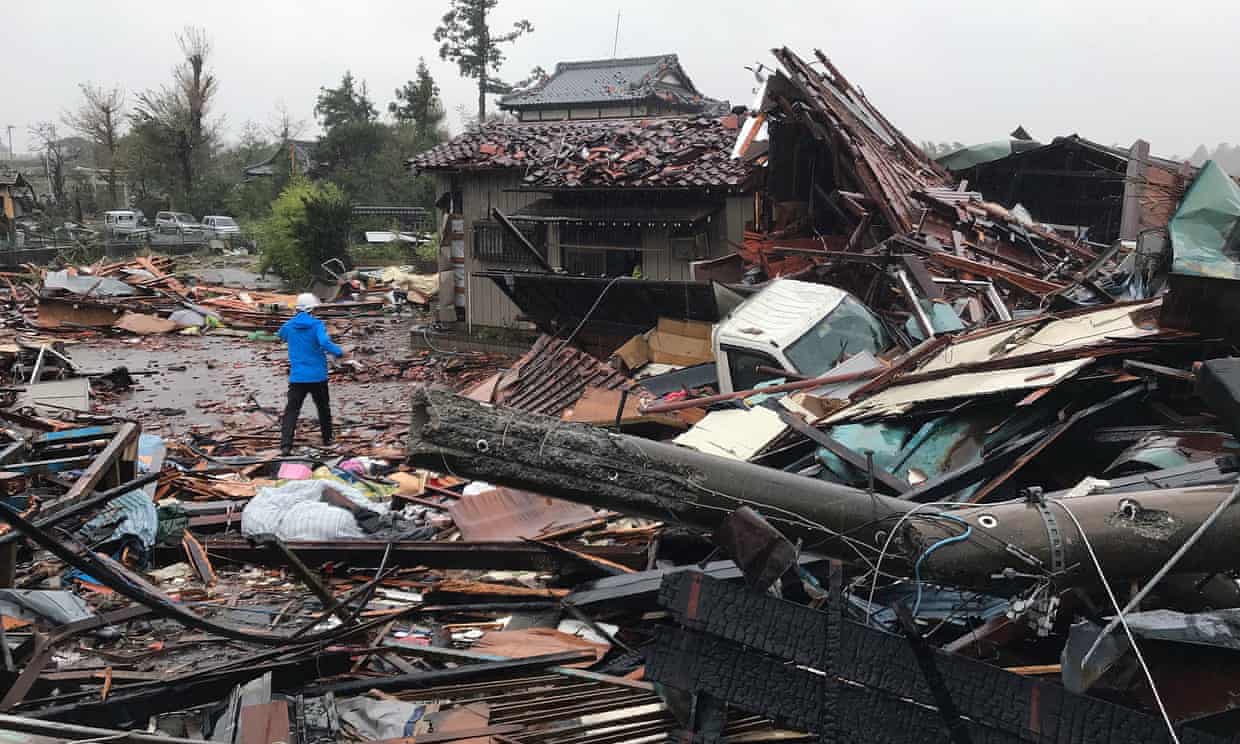
Typhoon Hagibis: Biggest Japan storm in decades makes landfall
This article is about the big typhoon currently hitting Japan, the worst one directly affecting Tokyo and surrounding areas for the first time in 60 years. As of now, at least 5 people are reported dead and more than 10 people are missing. If we just hear the number of dead or missing people, it might not sound serious, but the typhoon has been affecting the country in many ways, including power outage, flooding, flight cancellation, and the Rugby World Cup games cancellation.
I related this article with the class reading about Katrina, the worst hurricane in the U.S. history. Though the scope of the disaster is different, the tragic situation like flooded homes applies to both cases. This news is very important to me, because my family is actually in the risk of being threatened by the flooding of the major river nearby. My parents said that they moved all their important belongings to their rooms upstairs and taped all the room windows to protect themselves from the heavy rain and winds. It obviously has a huge impact on many people’s lives in the area.
I feel shocked about this typhoon because I didn’t expect it to be so devastating. Japan is a country of natural disasters, so I grew up hearing those sad news all the time, but this news is quite heartbreaking. I’d use this article carefully to discuss the typhoon’s causes (relation to global warming?) and effects, and disaster prevention techniques (i.e. emergency supplies). Moreover, I’d like to focus on how people like the disabled, the elderly, the poor, and foreigners are put into disadvantageous positions and get affected more severely. I’d also like to bring up the ethical issue of people going to work due to the obligatory feeling and risking their lives in the middle of typhoon.


Wow, Mari, I hope your family is doing alright! As you stated, this article could be used to introduce many issues. The fact that you can also include personal accounts along with the story reduces the distance we often feel when reading articles like this.
One thing I like about this article for language learners is its brevity and simplicity. The article can be read and analyzed by a broad range of language levels. Also, the video is useful. I might have students watch the video a few times and practice reading the statements in the first 45 minutes of the video out loud (before the reporter speaks). They could act as reporters as they read the lines.
Thanks for your comment, Jeanne! Yes, it’s been two weeks since the typhoon happened, and my family is doing just fine after all these concerns, thank you! But I feel so helpless to see that the reported number of those who died has increased up to 88 people, 70% of them being old people aged more than 60 years old. This data show how the elderly people are more prone to becoming victims of natural disasters.
And yes, I love your idea of acting as reporters as students read the lines! I also agree that the video is useful and can be played multiple times to check their comprehension.