
Understanding My Privilege
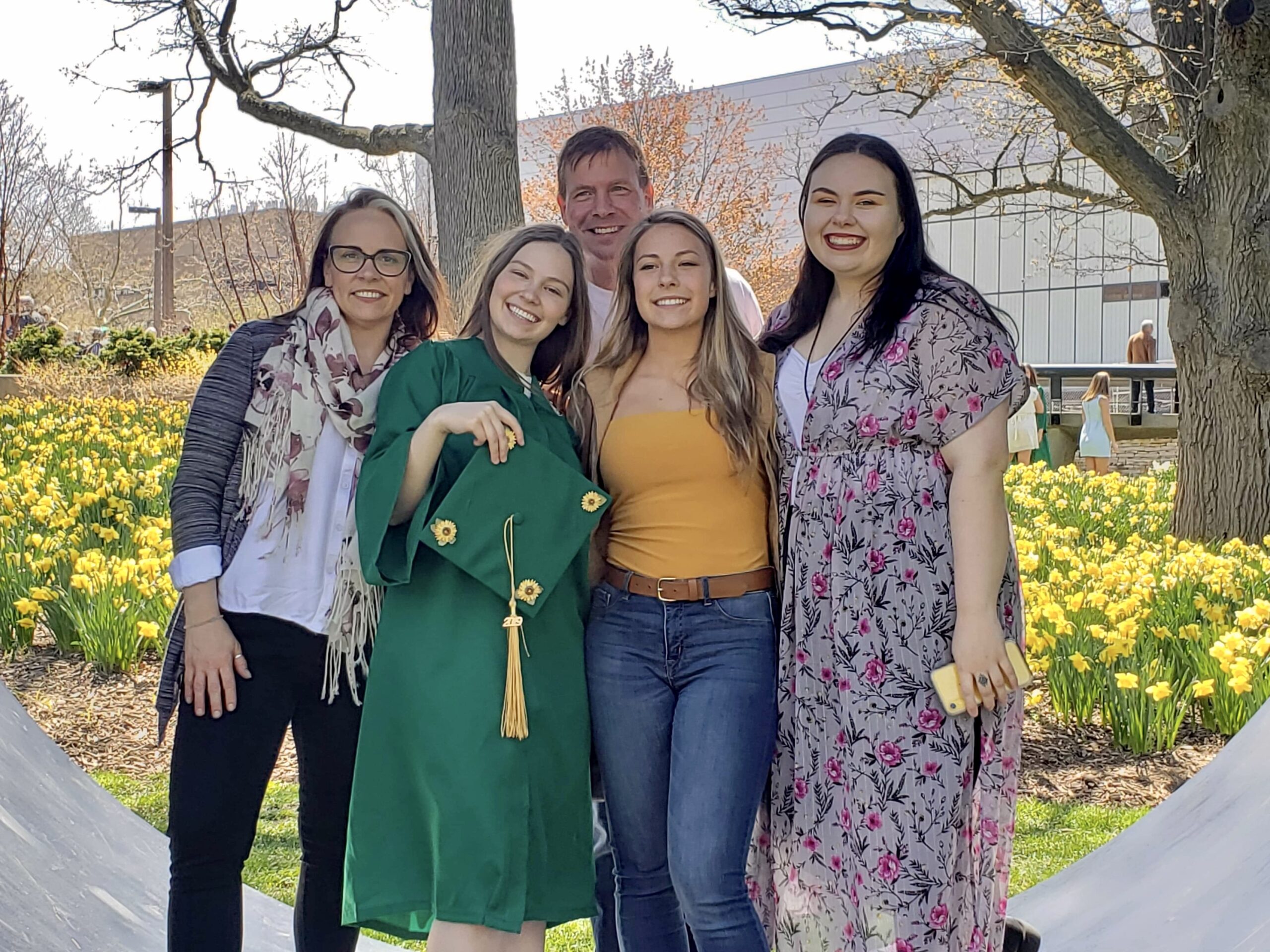
I am a college-educated, financially stable white woman. I am in a significant position of privilege and there are a lot of factors that led me to where I am today, with one being the fact that I have never had to wonder whether I was passed by for an opportunity, or even been made to feel unsafe, because of the color or my skin. I wanted to acknowledge my white privilege first and foremost, because I believe it has affected so many aspects of my life without me even knowing or realizing it. I am continuously striving to become more aware of, and fight against, not only the injustices faced by my friends, peers and fellow humans because of the color of their skin, but also the unfair advantages that the color of my skin has allotted me and those before me.
Another significant source of privilege in my life is the fact that I grew up in a supportive familial environment. I have two parents who made a significant effort to be involved in my and my siblings’ lives as we grew up, which included things such as: family leisure activities, helping with homework and attending all of our sports games, award ceremonies and parent-teacher conferences. While we did not have an abundance of wealth, we always had enough to fulfill our needs and many of our wants. Money was never something I had to think about as a child, and for that I feel so grateful. I was encouraged to try new things and pursue my dreams by parents who did their best to provide me with more than they had had when they grew up.
It was this encouragement to follow my dreams that helped me make the decision to attend college, where I studied international relations and economics with the hopes of working in the field of international development. I worked in this field for a couple of years before deciding that I had developed a stronger dream I wanted to follow, which was to become an ESL teacher. It is important to note that while at college, I met my partner Peter, who has been a significant source of emotional (and at times, financial) support for me throughout my adult life. He also played a large role in encouraging me to pursue my degree at MIIS; while I very much wanted to make this career change and attend this institution, I was initially hesitant due to the amount of student loans I would have to borrow. I ended up taking the leap, and the emotional support I received from Peter and our families played a large role in instilling my confidence to do so.
While I grew up in a household with parents who were able to support me financially and emotionally, I would say that these types of support systems were not necessarily distributed equally in the society I grew up in. In regards to the emotional attention I received from my parents, I would say I was definitely on the privileged end; I had many friends who did not appear to receive the attention from their parents that I did from mine. This was based on observations from when I would go to their houses; a lot of times, I noticed that my friends’ parents would work quite late (likely indicating that those families’ financial situations were not quite as secure so the parents had to sacrifice time with their children in order to financially support them), or did not seem to be as involved with what their children were doing (from my perspective as a child and during limited observation time, of course).
I appreciate reflecting on my privilege because it reminds me of an important aspect of why I am where I am today and what I hope to take from my story into my future educational contexts: I would like to take the skills and knowledge that I have had the opportunity to gain and share them with others, especially those who may not have had the same opportunities as me. It is extremely likely that many of my future students will not have had the same level, or even types, of privilege that I have had growing up, whether it be in regards to familial support, educational opportunities, financial support, etc. With this in mind, I want to create an environment which acknowledges and celebrates the diverse backgrounds of my students while encouraging them to take the tools they have learned throughout their lives—and hopefully even providing them with some new ones—to work towards pursuing and reaching their linguistic and personal goals.


Dear Stephanie, thank you for your thorough and perceptive reflection. Reading your reflection made me realize more things about my upbringing and privilege. Thank you for bringing up the significance of financial stability. I didn’t think about the fact that my parents came home from work around 5-6 and we usually ate dinner together every evening because they both had good 9-5 jobs and didn’t have to work late or irregular hours. I also didn’t think about the opportunities and experiences they gave me, such as summer camps, extracurricular activities (choir, cello, etc.) vacations and camping trips. I think taking these things for granted is a part of our privilege. Our recent readings have made me realize that it is not my place to try to “rescue” people from less privileged backgrounds, but to collaborate with them because our liberation is tied together. However, class is kind of a taboo topic in the US, so I’d like to gain the tools to reach out to underserved students without making them feel like I am looking down on them or assuming I know how they feel.
Dear Stephanie and Zoya, thank you both for sharing your experience. It is new to me, especially those after-class activities, which I don’t have any in China (Sadly, what I can remember is tutoring and endless exams). And I also realize how different contexts can be by reading your reflections. Zoya, I also like your attitude of incorporating social justice into the class while making students feel safe and comfortable. It is tricky to talk about class especially with students from diverse backgrounds.
Hey Stephanie,
This reflection was insightful. I’ve noticed that a lot of people have one aspect of their “privilege” that they prefer to acknowledge over others – I wonder why that is. Maybe it’s because of they way we perceive the “strength” of that privilege and its role in society, but I’m sure it’s relative to each person.
I relate to your mention of your family dynamic and how it’s manifested itself in your life. Out of all of my friends growing up (the ones in my immediate neighborhood & ones at school/different schools), I noticed I was one of the few who had the stereotypical “functional” family – my parents were good people, likeable by others, they didn’t hate and/or wrong each other on a regular basis, they took care of me (and my siblings, but they’re not relevant at the moment), etc. I never really thought about the privilege of a family you *actually* like, but more importantly, people you can depend on in a variety of ways. A solid support system isn’t a given, and shouldn’t be taken for granted.
Hi Zoya, Mujun & Jada,
Thank you all for your thoughtful comments, and for taking the time to read my reflection! You each brought up insightful points and I just wanted to let you know that I saw and appreciate them.
Stephanie, thank you for this very sincere reflection. I enjoy seeing similarities in your reflections as well as nuances. I am curious to know more about how you switched from a career on IR and economics to ESL? What triggered it? And actually I am more curious to see what kind of parallelism you see between these two fields? We will go into political economy a bit in relation to social class but I doubt that it has ever come up in your other courses. Maybe I am wrong?