
Pollution, recycling and greenwashing
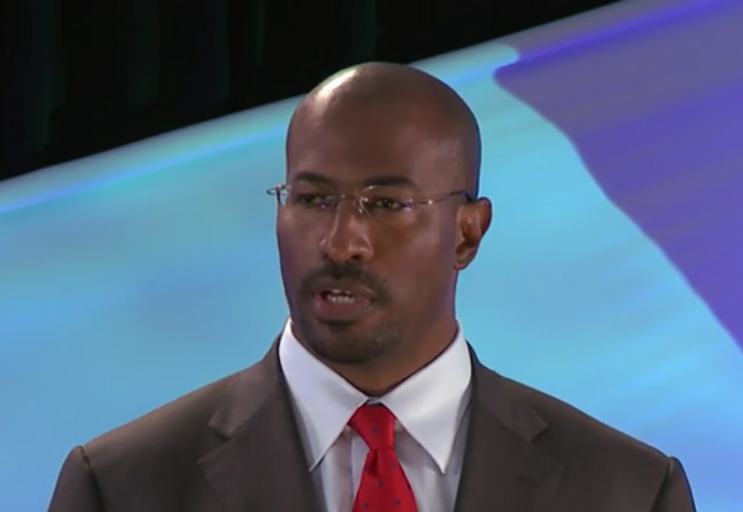
If you have been following the election debates and the news, you have probably seen this viral video of Van Jones. I like how articulate he is in this video on pollution, and how we are all misguided by recycling efforts. Recycling is a band aid – we need to cure the disease! Oh and here’s a good criticism on another packaging of “eco-friendly” consumerism: greenwashing!


We have come a long way from the movie The Graduate (set in 1960s https://www.youtube.com/watch?v=Dug-G9xVdVs ) in which plastics was the new wonder product. Now, plastic is in everything and everywhere (to include the top of Mount Everest). I saw the movie Dark Waters last year about the use of forever chemicals and it was scary; it almost made me throw out all my teflon pots and pans.
https://www.youtube.com/watch?v=RvAOuhyunhY
Oliver, there’s a documentary on Netflix about Teflon (The devil we know). It’s very sad. and yes, they knew! (and still do!). I just watched it last week and I am throwing my teflon and never buying it again.
“47% of Fijians don’t have access to clean drinking water”
This says it all. Of course, if I were living in Flint, Michigan, I would be happy to have access to bottled water given the debacle of their water situation. So, we can see how this third clip loops back to what Van Jones was saying in the second one about intersectionality of poverty and the environment. Great to watch back-to-back. Thank you, Deniz!
Great videos. I really like Van Jones and I follow him on social media. What we was saying about how we have a disposable culture really hit home. I think this idea ties in with neoliberalist ideology. If something is not immediately useful to our perception it is useless and therefore disposable. We have become so engrained in this ideology that we now have throw-away people and throw-away communities. It was also incredibly profound to me the way Jones ties environmental justice to justice for incarcerated people.
Van Jones points out a lot of great points and addresses multiple issues that should be at the front of discussions. One of the great things he start with the video is talking about misinformation and misrepresentation. I think there are so many things in our society and globe that are so construed and represented in an unjust way. It is important to step back to look at the situation or subject at whole and also understand all the variables and components that go into that one subject and how they all interact with one another.
It is really interesting when we think deeper about the words in the Fiji commercial, “bottled at source, untouched by men”. It formed a scary and ridiculous picture of a bottling machine or a bottling factory in the hills by the spring, or large industrial pipes plugging into the natural scenery in the Fijian islands. Not to mention all the parasites and pathogenic factors in the natural water it tried to promote.
The illusion of being “green” can indeed comfort the guilty of harming the environment for the consumers while reproducing the pastoral illusion of city dwellers.
When I watched the greenwashing video, I was thinking about why we buy it. What is the logic behind this effective marketing? People tend to be brainwashed by the concepts of being good to society. But usually, some concepts are created by the dominant groups. We may be misled in a direction to protect the environment. What I can think about from an educational perspective is that some majors in college, like economics, finance, statistics, really need some courses related to social justice or ethical issues in their industries.
When watching the greenwashing video, I kept thinking about the sustainability or zero waste products that are marketed like glass or tin tupperware and bamboo cutlery sets. While these are high quality, durable products, there is also this message that you need these specific products to be considered sustainable. However, your household cutlery and yogurt containers/ pasta sauce jars can do the same job. I wish there was a stronger focus on using products you have before making a switch to a higher end product.
I want to highlight how vulnerable Van Jones was in the first video and the barriers he is breaking down by allowing himself to be emotional on television. Patriarchy and toxic masculinity hurt men too, and I think one of the most prevalent ways they do so is by telling young boys and young men that they cannot cry. To do so would mean to be weak, feminine, soft, emotional, et cetera and I want to honor the vulnerability and bravery he displayed.
In the second video, the connection he makes between the disposability we have come accustomed to with plastics and products in American society and the prison industrial complex rings true. I think this is a very powerful connection and I could not agree with him more. America leads the world in number of incarcerated individuals and those individuals are overwhelmingly Brown and Black. Not only have we come to live in a system that privatizes and capitalizes off of, often times, the most disenfranchised peoples, but American discourse and action has repeatedly said that the lives and bodies it finds most disposable are more often than not Brown and Black and poor. If not disposable by way of incarceration, disposable insofar as they occupy the spaces that White, middle/upper class individuals do not want.
Finally, his TED talk reminded me of Erin Brockovich. If you don’t know her story I highly recommend looking her and her work up! She has made a legal career working on anti-pollution lawsuits, most notably in a case against PG&E in the 90s. Residents in Hinkley, CA were victims of water contamination from waste runoff at a nearby PG&E plant. The town was very low income and it turns out PG&E had known about the contamination since the 50s and did not do anything about it. Here is a clip from a biopic about her life that I think encapsulates the comfortable distance many Americans feel between themselves and environmental issues that disproportionately impact people of color and individuals facing poverty.
https://www.youtube.com/watch?v=BGX4nMrnxg0
Hi Sydney, I just want to agree with and echo your first paragraph about Van Jones displaying vulnerability and the powerful antidote that can provide to toxic masculinity. Thanks for making that point!
I am sure you have already seen this but here is his comments after Biden’s election: https://www.youtube.com/watch?v=9eMoCW1Pq54
The videos can really trigger a lot of thoughts. The Fuji water advertisement was deceptive and we have to do some research before we pay for our beliefs. It is so common to see greenwashing advertisements and it is easy to be lazy. I remembered that when I first knew about solar panels’ negative effects on environment (when it break down it will produce some toxic waste), I was shocked. Then I realized how important it is to think critically.
First, I just want to reiterate what Sydney said, I love Van Jones! I follow him on social media and I just find him so inspiring! He is a great role-model for all men!
Second, thanks for sharing these videos, Deniz! Environmental Justice has always been near and dear to my heart but even more so now because my Applied Linguistics Capstone project is based around it.
Third, I was unaware of “Cancer Alley”. I had to google more about it once the video was completed and found this article https://www.nbcnews.com/science/science-news/cancer-alley-renewed-focus-systemic-racism-too-late-n1231602 written in June of 2021. The article brought up how Covid affects people of color more because of the environmental racism these communities of color are subjected too in the first place. It reminded me of something I read in the Kuehn article, “We don’t have the complexion for protection” (p. 331). People of color will ultimately always suffer unless we find a way to change the system.
Fourth, what Van Jones said about people getting to choose what they buy or don’t buy really stuck with me. I like how he said, it’s not about choosing what to buy or what not to buy, it’s about having access to it and the money (which gives you the choice and or the freedom) to choose what to do with it. It reminds me of a documentary I watched, (sorry I can’t think of the name) but it was about a community of color not have accessing to fresh fruits or vegetables and that their community was only surrounded by liquor stores. It really aggravates me when I hear people say, oh you should only buy X because it’s better for the environment. Obviously, we all want better for the environment but shouldn’t we want better for people too.
Fifth, the Greenwashing video reminded me of the two documentaries on Netflix called Cowspiracy (relating to how animal agriculture is affecting the carbon emissions released in the air) and Seaspiracy (relating to making sure companies actually use sustainable fishing). If you haven’t watched them, I suggest to add them to your list! It made me second guess all the food and products that I buy at the store and are they actually environmentally friendly, as they claim to be.
Lastly, I found this website https://www.epa.gov/students which provides resources for educators and students to help learn about protecting the environment.
Van Jones’s TED talk made me think about:
1. How China no longer takes our “recycling” since implementing its National Sword policy in 2018, and how now Việt Nam and other South East Asian nations have taken on the environmental and human toll of burning or disposing of our garbage.
2. His comment about Cancer Alley in Louisiana reminded me of all the ways the cost of our voracious consumerism and consumption is externalized to remote/rural and/or BIPOC communities, and the way in which Winona LaDuke brilliantly catalogued in “All Our Relations” (1999) the trashing and sacrificing of Native sovereignty and land for the mining of minerals, the storing of nuclear waste, the wanton destruction of habitat of endangered species, the flooding of sacred and food gathering areas for hydroelectric projects, etc all in service of sustaining the unsustainable lifeways and consumption of coastal and/or urban dwellers who largely remain ignorant of price being paid for living the way that we do. The burden is being borne in the far off “over there” by Others.
3. How evil, exploitative, and dehumanizing the prison industrial complex is in the U.S., and how it is propped up by racist policies which disproportionately affect folks of color–especially Black folks.
The Fiji water greenwashing video shared two facts that I found particularly arresting:
1. it takes an average of 450 years for the plastics in Fiji water bottles to breakdown into the environment (this is criminal); and,
2. 47% of all people in Fiji do not have access to safe drinking water (this is also criminal).
The other thing to consider is that all that water (and the plastic it is contained in) have to be shipped across the vast Pacific Ocean using fossil fuels on huge, polluting container ships. There are no two ways about it, this is environmental suicide.
Fiji has been in the vanguard of nations calling for global emissions reductions at the COPs in Copenhagen, Paris, and now Glasgow not least of all because climate change posses an existential threat to their nation and to nations across the Pacific. The government of Kiribati (pron. Kih-rih-bas) bought 20 sq km in Fiji back in 2012 as an insurance policy should they need to evacuate their citizens if (and now looking only like a matter of when) the atolls that make up the country become uninhabitable due to climate change (see: https://www.theguardian.com/environment/2014/jul/01/kiribati-climate-change-fiji-vanua-levu).
The TED Talk by Van Jones was really interesting to hear. In my family, we were always very proud of how much we recycled, but the idea that most of that goes to get incinerated in another country makes me wonder why we were so proud of it to begin with. A quote from him that stood out to me was, “If you create a world where you don’t trash people, you don’t trash the planet.” And I think this is very true. There is no such thing as no humans getting harmed when it comes to the planet getting destroyed. All of us are affected and all of us are hurt when our home is getting destroyed.
The Fiji water greenwashing video reminded me a lot of a agriculture class I took in my undergrad. It was about where food comes from and the label of “organic,” and how the term “organic” really doesn’t mean much anymore, but also how difficult it is to get. So all those people at the farmer’s market might have organic food, but they end up going out of business before getting the label because people don’t want to pay the price for organic food without the label. So many big companies can easily get this label while local communities cannot, and so we end up missing out on helping the local economy and reducing pollution.
I watched Van Jones’ TED Talk and the Fiji greenwashing video.
Van Jones really made me understand the intersectionality between the environment, class, and race. I never would have thought about incarcerated people in California and burning plastic bottles in Asia as interrelated, but now I know they are. My question is, is capitalism so hegemonic that people are made disposable nearly everywhere? Are there any societies where people are not disposable?
Recently I’ve been hearing Exxon ads while listening to podcasts. A woman talks in a gentle voice about how Exxon is working to reduce greenhouse gas emissions (unclear how they’re doing it — something about transportation logistics?). It’s so creepy, I feel like I’m in a dystopian novel being brainwashed.
When the eggs came up in the Fiji video, it reminded me of how I realized that the label “cage-free” on eggs is basically meaningless when doing this week’s readings. Now I’m wondering what else is a lie. It’s pretty distressing. How can we be ethical consumers when the entire capitalist system is lying to us at every turn?
I just saw in the Steger reading that Americans see an average of 16,000 ads and labels per day. I can only come to the conclusion that we are being brainwashed every day and no one says a thing about it. Everyone acts like it’s normal! (Now I’m remembering how my parents always insisted we mute the commercials when we watched TV together when I was a kid — turns out they were right.) With the power of marketing, we are groomed to be consumers from a young age.
These videos are so important! I really appreciate Van Jones highlighting the intersection of social justice and ecology – his emphasis on disposability of people and of plastic is very powerful.
I also appreciate how he was able to call in the audience – I think he made it clear that this should be personal to each and every one of them without shaming them. The idea that some (probably majority white) people working in environmentalism haven’t connected back to social justice, but pat themselves on the back for recycling, reminds me of Marsha P. Johnson’s famous quote “No Pride For Some of Us Without Liberation For All of Us.”
It was interesting how at the end he said “most of us have two arms” – it is like he realized this sentence was a little ableist but still wanted to include it.
Also, I really resonated with the part about getting siloed into making change on a certain issue. This is a great point and I think we should remember that all of our sectors are intersectional, whether we are working in education, health, climate, etc.
I have thought a little bit about greenwashing in the past, but this video helped clarify a few points. I think the main takeaway is that we all should try to buy fewer things. However, that is on a very individual level, whereas the problems need to be solved on a larger level.
Like Sydney mentioned, I found it very powerful to see the emotion and vulnerability displayed by Van Jones in the first video. While this video was introduced above as being viral, I actually hadn’t seen it yet (or any of the three videos, for that matter), so I appreciated watching all of them and learned a lot. In the second video (the TED talk), was the first time I had heard of the term biomimicry; we only got a brief introduction into this term through the video, so I am now curious to look more into it and see the different ways humans can emulate practices/strategies found in nature for the purposes of innovation. In regard to the greenwashing video, I was saddened–but not surprised–to learn that many companies advertise their products as being eco-friendly without it actually being true. In the future, I am going to be doing a lot more research into where the products I purchase, or plan to purchase, are coming from.
Thanks for sharing these videos with us Deniz. I appreciate learning more about environmental justice as I feel that I have a lot to learn about this theme. Prior to watching Van Jones’ TED Talk, I wasn’t aware of Cancer Alley and its relationship to low-income communities. Like what Yanci mentioned above, it reminded me of Kuehn’s article in that communities of color and lower-income communities are always the first communities to get affected by injustices such as the effects of burning plastics, as highlighted in the TED Talk. Another thing that stood out to me was when Jones said, “… in order to trash the plant, you have to trash the people.” This quote stood out to me because it shows how environmental issues are created by humans and are actions lead to environmental issues. After watching the video, it makes me more conscious of the amount of plastic I use and I want to find different ways I can reuse the plastic bags I have at home.
In addition, after watching the greenwashing video, it reminded me of how a lot of people (including myself) have fallen for the “eco-friendly” advertisements on products. When I was younger, I would always believe that having the “eco-friendly” tag or having a label that says products are “cage-free” were true. After doing some of my own research and taking an undergraduate course called “Thinking about Nature” made me realize that companies add greenwashing titles so that more consumers buy their products. Similar to what Greg mentioned above, the statistic of 47% of Fijians not having access to clean and safe drinking water stood out to me. The Fiji brand claims that they’re doing great thing such as providing clean water to underserved and remote areas and health care services, yet there are still people in Fiji who don’t even have access to clean and safe water. (https://www.fijiwater.com/pages/about-us)
Overall, this makes me question big named companies and their intention when they advertise their products.
I really enjoyed these videos and learning from Van Jones. I had heard of him but hadn’t seen either of the videos. I really liked the way he tied together social justice and environmental justice with the idea of disposability. His quote, “If you don’t trash people you can’t trash the Earth,” is going to stick with me. It reminds me of the sustainability mantra “Reduce, reuse, recycle,” in that most of us focus so much on “recycling” and forget that “reducing” usage of products is actually the first and most important step in sustainability. Recycling really should be our last resort, but it is so hard for us not to keep buying products. Corporations keep telling us that things are recyclable and that we are doing a good thing by buying their product and recycling it. But of course they would never tell us that the best thing for the environment is to not buy the product in the first place. Our society is so entrenched in materialism and consumerism that it really makes me feel hopeless at times. I appreciated Van Jones’ positive outlook at the end about how creating a difference in one area of social justice (like environmentalism) really does have a positive effect on all other areas because it is all interconnected.
So many amazing comments to echo – thanks to Greg for bringing up Winona LaDuke, who also came to mind for me, and thanks to Sarah for pointing out how the organic label is actually really expensive and difficult to obtain, making it easier for larger companies (with more of an environmental impact, often) to get them. This issue is especially important to me, and I think a term that Van Jones didn’t use but is clearly alluding to is environmental racism (as in Cancer Alley, or in the examples Greg provided of toxic mines located on Indigenous lands, or the examples Yanci gave of disadvantaged communities surrounded by liquor stores rather than access to fresh groceries). I was also reminded of an article I read about “food deserts” in these communities, basically that the stores that are located in poorer communities don’t carry fresh vegetables and fruit – they overwhelmingly carry processed, over-packaged, cheap goods. Living in Alaska has brought the issue of shipping and food security even closer to my heart. We import some 95% of our food from outside the state, and it ships a looong way to get to us. At the same time, oil and gas (and mining) development (all exported) has destroyed/is destroying/threatens to destroy lands and waters that have historically provided for generations of Native Alaskans (killing off fish, caribou, etc.). The cycle is a vicious one that then forces more processed, shelf-stable, often sugary or salty foods on peoples who have always and are trying now to engage in reciprocal and mutually beneficial relationships with land and water and other species.
As a premier business magazine, California Business Journal showcases success stories and industry trends to help businesses thrive.