
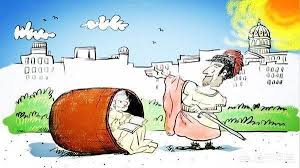
Shortbook Reflection-Class-differentiated Cynicism
Various. Anecdotes of the Cynics (London: Penguin, 2018)
Summary of the Book
The book has four parts, and each introduced the thoughts of one representative philosopher in Cynicism: Kynikos, Diogenes, Crates, and Bion. Radical or mild, they share the opinion of self-disciplinary, appealing for a lifestyle of low desire in materiality and luxury enjoyments. The cynicism philosophers flout the aristocratic conventions and question the problem between human and nature, “having enough” or “having too little.”
Pedagogical Use of the Book
The book, especially the first part, which is a dialogue, or debate between Kynicos and Lucinus, can be used as an example for expressing agreement, disagreement, and developing an argument with reasoning and examples. The parallel construction of Kynicos’ rhetoric can also be extracted from the text to teach certain language forms they are affiliated to.
Discussion Points in the Book for Students to Reflect on
First, the students can read some pieces of citation from the book to discuss what they think Cynicism is and what do they think about Cynicism.
Then, the students can discuss who should conduct a cynicism lifestyle or at least learn from cynicism, and who should not.
Lastly, they can discuss to what extent and in what circumstances, cynicism can facilitate or undermine social justice in their home/target society.
How the Book Embodies/Reflect the Core Concepts and Issues in Class
I chose the book to find out how a philosophical school is so often criticized today as selfish, cold-blooded, ingenuine, and indifferent. I think I have found my answer after reading the book, and comparing cynicism ideas with the Chinese philosophers I read before. I would argue that Cynicism is for the privileged, or upper class of the society, but not for the oppressed groups, and should not be normalized as a public value of the society. Cynicism can be an example for discussing how people from different social classes have different desires, needs, and requirements when pursuing social justice.
The cynicism philosophers are usually mocked as “dogs”, as the etymology of their school, for their shameless behaviors and bad manners. Some people even criticize their lifestyles as sensationalism. However, one citation of Diogenes inspired me to understand cynicism from another perspective.
“He said he modeled himself on conductors of the tragic choruses: they also encourage the choristers to sing a little sharp, with the result that they end up singing right on key.” This citation made me realize that the cynics are fully aware of the wicked side of human nature: indolent, greed, etc. And believe that strict discipline on self can be a way out in order to get to the moral fulfill.
The cynics follow nature and stick to the use of creatures to their original purpose, and thus limiting their desires of “extra” things or usage. As long as they can survive healthily, there seems no need for more delicate food or more well-painted clothes. This reminds me of a controversial citation in Daoism “天地不仁,以万物为刍狗;圣人不仁,以百姓为刍狗(The nature is not kind, and treat its creatures as something that can be discarded after it committed its use; The Saints (or emperors, in another interpretation) are not kind, and treat the people as something that can be discarded after it committed its use.“ Some people think citation points out the cruelty of heriarchial societies; while others think it means that the saints should treat people equally, just as nature treats everything.
The Daoism citation brought me a new perspective to look at the cynicism and rethinking why it is criticized nowadays as indifferent. Comparing cynicism with Daoism, I would argue that cynicism is something that should be used for the privileged group for self-discipline, instead of a lifestyle recommended to the oppressed groups. Like Wang Fuzhi, a philosopher and historian in the 15th century pointed out, “其上申韩者,其下必佛老”, when the regime puts on strict laws and heavy punishments on the people to emphasize the authority of the power, the administrations of lower levels and the people would conduct a low-desired and indifferent lifestyle, as the Buddism and Daoism do. Similar examples have been seen various times in history, for example, in the USSR: absolutism and autocracy would push its people to cynicism, and that is why cynicism is often criticized by the social act.


Keyue,
I’m intrigued by your last statement about how cynicism is often criticized by the social act. I’m not sure I understand what you mean by the social act. Is it the same thing as ‘society’ ? Or is it more like the moral leadership of a society or culture? I appreciated your connection to how absolutism and autocracy in the USSR led people to become cynical about life. Cynicism seems to cause societies to stagnate.
Cynicism is usually criticized by social activists nowadays because, from a civil perspective, they are not desiring as long as they can keep their survival status. After I read the book, I find that cynicism should be a self-restriction for the privileged classes, not a requirement or suggestion provided to the oppressed classes. I do not think cynicism should be generalized to all social classes, but the fact that it is used, and mostly used by the oppressed class to avoid struggling and fighting for their own rights.
Thank you for this Keyue! To what extent, would you say, should we (or can we) distinguish between ‘Cynicism’ (the ancient philosophy) and ‘cynicism’ as we use the word today (to mean something like ‘being disposed to disbelieve in human sincerity or goodness; sneering’)? Were the Cynics cynics? Or is their philosophy something fundamentally different? This seems an especially interesting question today in light of the German philosopher Peter Sloterdijk’s argument in his influential book _Critique of Cynical Reason_. Sloterdijk argues that cynicism is the dominant mode in contemporary culture, and then proposes as a counter-strategy against modern cynicism precisely the “kynicism” of the ancient Cynics. His argument is quite complex, but has been picked up on by other contemporary thinkers, notably Slavoj Zizek.
Thank you, Deniz, for introducing Sloterdijk and Slavoj Zizek. I have not read their works but to my understanding, cynicism in modern times is more like a self-persuasion or self-comfort to accept the statue quo, However, when I read about the ancient cynics, I found that they are not criticizing the common people but the aristocrats for having too much desire. That is why I think cynicism should be a self-discipline for the privileged groups instead of a tool to educate the oppressed groups.
I agree, Keyue, that cynicism can be used as either a coping mechanism when things seem hopeless or as a justification for not trying to take action to improve social problems when one is in a position of comfort. It’s interesting to note the language society uses around the second position: “That’s life!” or “Que sera, sera”
visit my web,thnks you
samba green 與百搭穿搭靈感
adidas samba哪裡買最便宜
samba
samba og
愛迪達 samba
adidas samba og
samba 鞋哪裡買最便宜
adidas samba 台灣
adidas originals samba
adidas samba 穿搭
adidas samba哪裡買
adidas 門市
adidas og哪裡買最便宜
adidas samba blue
adidas samba outfit
adidas samba 厚底
adidas samba classic
samba green哪裡買最便宜
adidas samba 綠色
愛迪達經典鞋哪裡買最便宜
samba adv
samba shoes
samba classic
透明煙彈革命!六代主機的視覺系體驗
relx 電子菸
relx
悅刻
悅刻電子菸
電子菸 relx
電子菸線上購買
悅客電子菸
relex
悅克
relx電子煙
瑞克電子菸
悅刻主機
relx 主機
relx 電子菸台灣
電子菸主機
電子霧化器
電子菸價錢
悅刻煙彈
relx 煙彈口味
relx 煙彈
relx 煙彈口味推薦
悅刻煙彈口味
煙彈 relx
relx 煙彈台灣
電子菸口味
菸彈電子菸
銳克煙彈
煙彈
菸彈
煙蛋
電子菸價格
煙彈口味
電子菸菸彈
電子菸購買
relx 1 代
relx 5代
悅刻五代
relx 6代
悅刻六代
relx 5代主機
悅刻五代主機
relx 6代主機
悅刻六代主機
relx 5代煙彈
悅刻五代煙彈
relx 6代煙彈
悅刻六代煙彈
adidas samba
nike air force 1
nike dunk
samba
adidas originals
yeezy
愛 迪 達 鞋子
nike sacai
nike 鞋子
nike vomero 5
nike x sacai
nike 拖鞋
nike sneakers
nike zoom vomero 5
yeezy slides
You really know your stuff.
Loved the tone and clarity.
This deserves more attention.