
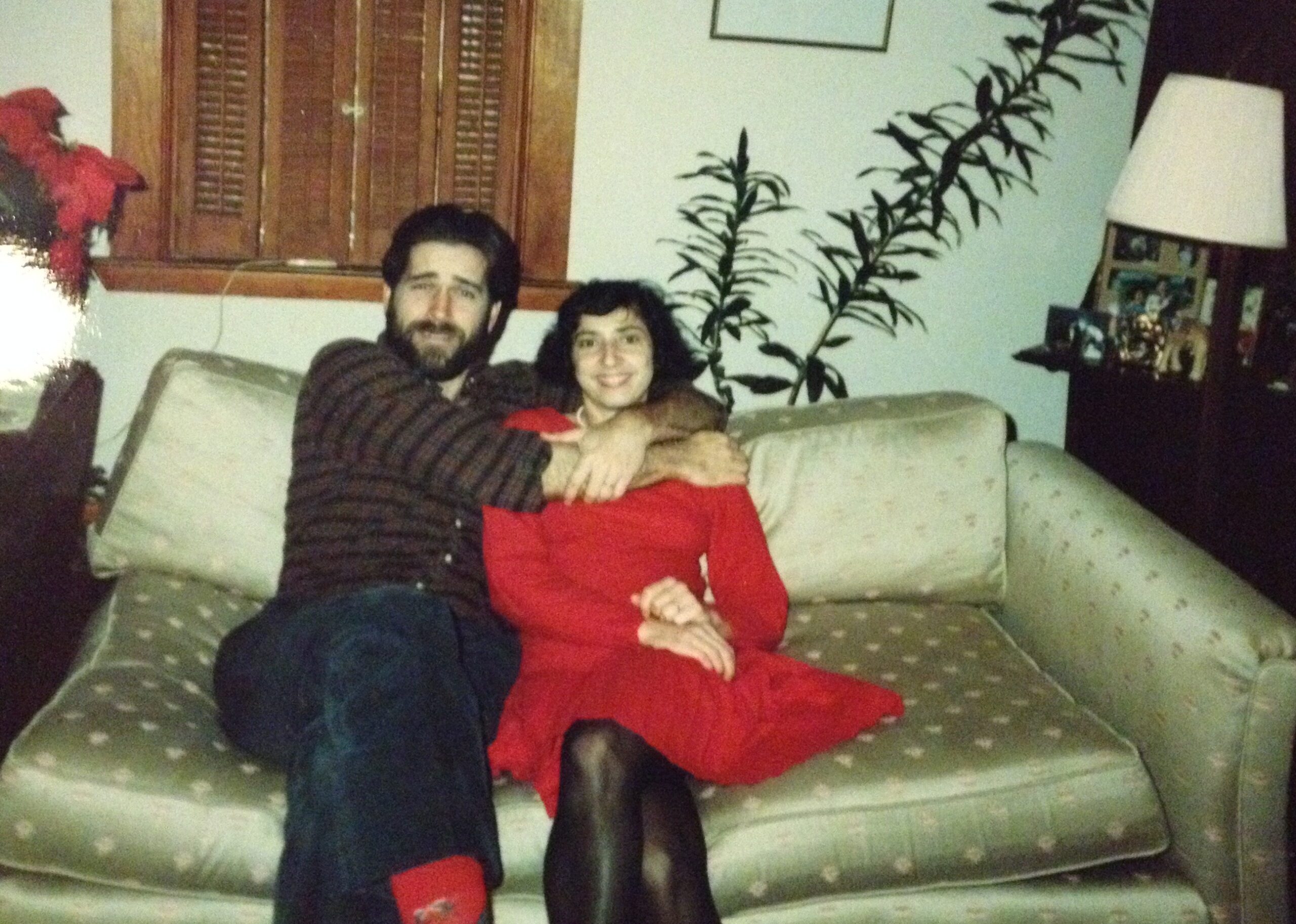
Understanding My Privilege
While I have privileged immensely from my identities as a white, cis-gender, hetero-presenting woman, I think the greatest factor in where I am today is due to the unconditional support from my family. Although this support has come in many forms, it was the financial stability my parents provided throughout my childhood and teenage years that influenced my life trajectory the most. I was able to receive individualized help like speech therapy to lose a lisp that marked me at school and I was able to pursue interests like ballet, soccer, and guitar that required uniform and instrument purchases. I also did not have to worry about contributing to my household and so I did not need a job during the school year, letting me focus on schoolwork and extracurriculars. The biggest financial leg up I’ve privileged from was my parents paying my undergraduate tuition so I only had to cover rent, groceries, etc. and was able to graduate debt free.
Along with financial support, my parents encouraged my siblings and me to pursue whatever path we wanted regardless of perception or salary rates and they ended up with a religious studies and two anthropology majors. My anthropology degree is a huge factor in where I am today because it was the first time I critically analyzed a field of study, the materials used, who’s excluded, and who gets to present their findings. My program was intent on confronting anthropology’s colonial and racist beginnings and breaking down the belief that an anthropologist is neutral observer. While I haven’t become an anthropologist, I continue to use what I learned now in relation to the international education field.
The financial stability I privileged from had a ripple effect into other areas of my life and allowed me to have experiences, which I would not have been able to do otherwise. This is not the case for everyone. Many of my friends were pressured by their parents to major in a “practical” field, one that would be financially smart but not one they were interested in. Others who went into debt going to college will not consider moving or graduate school, two things that I have been able to do relatively easily.
Financial stability is not equally distributed. Both my parents come from tight knit, middle-class backgrounds with parents who set a precedence of providing for their families. One of my grandfathers set up college funds for my siblings and me so that the financial burden wouldn’t weigh as much on my parents and especially not on his grandchildren. However, many families are stuck in generational poverty without access or limited access to economic and social resources, such as eduction, healthcare, or environmentally safe areas that could help break the cycle. This can lead to life long trauma and anxiety that I’ve seen in students and friends, which keeps them rooted in place for fear of financial instability. Unfortunately, in this country we don’t value and fund social services that could benefit the greater population. As an educator, I find it imperative to advocate not only for your students in class but also for the interconnected social structures that effect their daily lives.


Mia,
I enjoyed reading about your life trajectory. What made you decide to study anthropology?
Was there a time when you felt like you should have studied something “practical” ?
Hi Maya! Growing up, I loved mythology and ancient architecture, which led to an interest in the people and culture behind the stories and ruins. Also, my older sister majored in anthropology and she was able to help in understanding the field before I got to college. In my sophomore year, I did question the practicality of the field and switched my major to global studies, which included an emphasis on political and economic issues. However, I realized I was more interested in anthro and switched back to that major but kept a minor in global studies.
Hi Mia, thank you for sharing.
I like how you talk about the fear of financial instability. I think this is a general societal phenomenon, also in China. I found this is rooted in the history they have experienced at least in my family. In my grandparents’ generation, they all experienced the struggle for the needs at survival level. They started everything from scratch and accumulate wealth for the next generation. All of the expectation of their grandchildren is having a stable life.
Hi Mia! I related very much to your experience and perspective on financial stability. Like you, I know there are many opportunities I have been able to take because of graduating debt free and having financial support from my family.
Your comment about interconnected social struggles reminded me of Maslow’s hierarchy of needs. If a students’ basic needs aren’t met (food, shelter, safety etc.) then how can we expect them to devote time to the need of education. It’s a vicious cycle because those basic needs can’t be ignored. Do you think if students chose to pursue education despite not having stability in those basic needs, they could break the cycle? Or is even this a lie embedded in white privilege?
Hi Mia,
I love the photo of your parents! Thank you for sharing. Where did you grow up? What was your high school like? Did your HS offer college counseling or did you rely more on your older sister and parents for guidance regarding college questions ?
Hi Mia,
Thanks for this candid reflection. I agree with Rebecca, very sweet photo of your parents. I did take a couple of courses on anthropology during my PhD, and they were one of my favorite courses. Language education does draw from anthropology a lot actually but mostly if you are studying/researching sociolinguistics. As I was reading your reflection, I couldn’t help but make connections between language education and anthropology. I think it is the same ideology that proposes an observer should be neutral just as a teacher should be neutral. And you’re absolutely right when you said “in this country we don’t value and fund social services that could benefit the greater population.” It is because individualism and meritocracy (the myth that you will get somewhere or become someone if you work hard enough and that there are equal opportunities for everyone) that when we see a homeless person, we think they don’t work hard enough, thus they do not deserve our “tax dollars.” It’s not a fair game at all.
ANGKAJITUTOTO
ANGKAJITUTOTOOO