
Reflection: History is Skewed by the Ones Who Hold Power
Summary
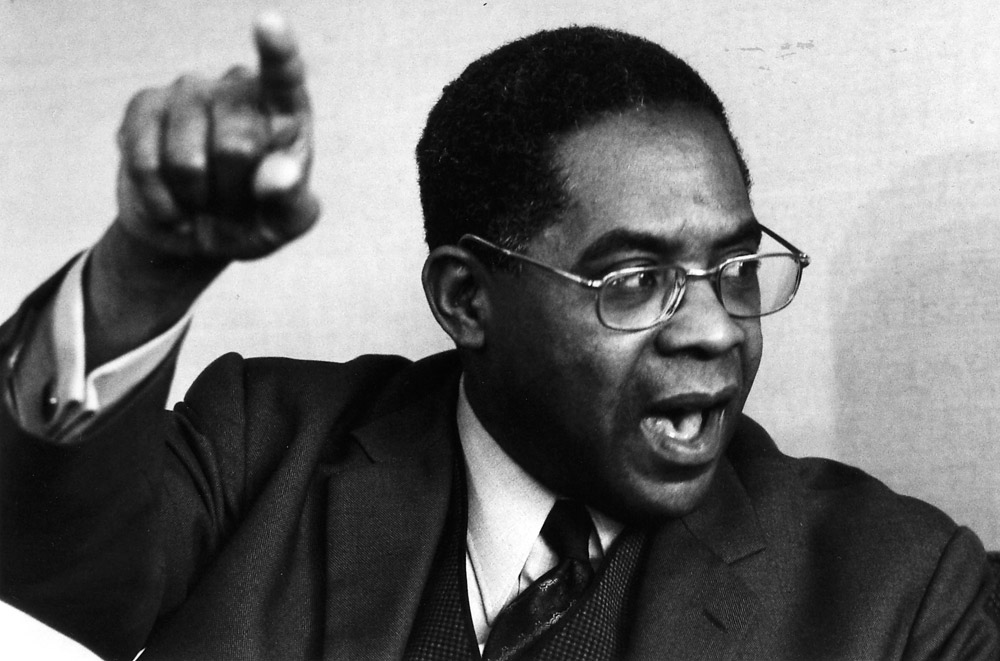
In his Discourse sur le colonialisme, Aime Cesaire lays out what he really thinks about colonialism in a frank and somewhat humorous way. This essay is a true discourse, it reads like a stream of consciousness, with historical examples. Cesaire outlines the injustices of colonialism from the lense of someone who grew up in Martinique (a former French colony) and educated in France. He lays out examples of European brutality throughout The Middle East, Asia, Africa, and the Americas. He contrasts these actions against those of the Nazis during Germany’s expansion. He argues that the only reason the world was outraged by the spread of Nazism was because Nazism was the act of colonialism against other white people. White people, argued by Europeans for centuries to justify colonialism, were the only ones with souls. Whiteness was the standard, everyone else was made to be subjugated.
Pedagogical Use
After having actually discussed this book in a course here at MIIS, I think it may be hard for some to digest. While I, as a self-identified woman of color, find it refreshing, it made some of my white American classmates very uncomfortable. I had the same result discussing it with a few of my friends. I think this is a book that is best taught in classes that already hold the decolonization framework or other specialized courses. Though I feel that the people who felt the discomfort would be best served by reading this book, I do not feel as though everyone is ready to digest the points that were raised.
A lot of the terminology is also highly specialized to those who would already be interested in the subjcet of colonization and the skewing of history. Cesaire opens with the phrase “we must study how colonization works to decivilize the colonizer, to brutalize him in the true sense of the word, to degrade him, to awaken him to buried instincts, to covetousness, violence, race hatred, and moral relatisim;” This discourse is an attack on Europe, an attack on whiteness. The everyday student is not ready for this. We saw how students were rearing to burn books written by a contemporary writer just bceause she addressed white privilege.
Where a language teacher could use this book to widen their students’ scopes, it is probably most suitable in higher education. Discussing with a professor of mine from Senegal, I was told that this book is taught at the high school level in Africa. But higher ed in America is typically made up of students of settler backgrounds, those who have probably not experienced being colonized in their history. It is a difficult subject to broach, but one that should be highlighted, especially for those who choose to teach in the realm of literature, language, or history.
Discussion Points for Students
I am lucky to have actually presented about this book in my course about Reclaiming Cultural Power in Subsaharan Africa.
The points I brought up were, what is colonialism?
Who are the settlers?
Whose version of history do we learn about?
Whose version of history do we have to take as an elective?
Why is it this way, even though most of the former colonies have gained their freedom?
Why is colonialism against white Europeans seen as so atrocious?
Why were we never taught the reality of colonialism in Asia and Africa?
Why is it that countries in Africa and Asia still glorify western ideals?
Why do colored people world-wide still aspire to whiteness, when it was whiteness that took away their humanity?
Connection to Our Course
The connections I saw were of power and privilege. Who gets to tell the story?
The fact that I am still so hesistant to consider teaching this book in courses because what? I might lose my job? I never read a single book while getting a degree in French literature that was nearly as polarizing as this. It’s so frustrating that I can say I have a degree in French lit and have only ever read one book that came from the Maghreb. Why is French literature so oversaturated by the musings of white people, yet France so proudly claims that contains 12 time zones.
References
Cesaire, A. (1950). Discourse sur le colonialisme. Paris, France: Éditions Réclame.


Thanks for sharing this resource, Ann! I am definitely going to take a look at this resource – like you I am interested in the topic of colonization and all the questions you raised, especially “Why is colonialism against white Europeans seen as so atrocious?”.
I can definitely understand your reflection about why this book might make some of your classmates uncomfortable. My question for you is, how do we respond when our classmates or students are uncomfortable? What strategies do we use to maintain the discourse in a way that not only challenges people perspectives, but perhaps changes them? I myself find it difficult not to become emotionally invested or to become frustrated when someone is blatantly ignorant.
How did you sense your classmate’s discomfort? Did you address it? If that class were to happen again (the one where you sensed the discomfort), would you change anything?
I’m curious what others feel about those questions too. I feel like social justice work is inherently uncomfortable, and I am constantly thinking about how we navigate uncomfortable conversations without the people we are engaging in dialogue with aren’t totally “scared off” or do not completely disregard what we say.
Also – this is marked as LGBTQ reflection , which I think is the tag for the reflection #3 due this week. Just so you know 🙂
Yknow … As a student in a class about decolonization and reclaiming cultural power, I take petty joy in making my classmates unfortable.
One of my defenses is that I literally changed my name to make it easier for them to pronounce, the least they can do is admit that a lot of the world’s problems stem from Europe. But again, I’m lucky that they willingly signed up for this class. There were 5 other French classes they could have signed up for that had nothing to do with this topic, so clearly there is some sort of interest/investment.
I think it’s so important to have people become comfortable with being uncomfortable, but it’s hard, especially if you start going towards younger students.
The tension in my class was suuuper thick. There was a lot of uhhhh, a lot of nervous chuckling, a lot of shifty eyes. But they rose to the occassion and attempted to discuss the best that they could!
I’ve been literally scolded for “alienating” well-meaning allies, who are still pretty racist at the core. And at this point I’m like, “listen, you can listen to me or not, I cannot force you to open your eyes.” I aim to educate, but I do not burden myself with fixing the entire world.
Hi Ann (and Kate),
Your question yesterday makes more sense now. I think I answered from the perspective of a teacher rather than a student – different power dimensions – even though I try to reduce my status as the teacher who historically has the power. But still, it’s very different when it’s the student who makes other “uncomfortable.” I don’t think there’s a simple answer to your (and Kate’s) question. It’s how true change/impact begins. It’s also about the openness of others – are they closing themselves to these discussions or simply asserting discomfort? If former, it’s a good sign – you can offer to engage in more discussions, ask them to read the book, and discuss it with you but if it’s the latter, I don’t know how you can transform that discomfort into something positive. Maybe a simple question “why is this making you feel uncomfortable?” – is it because you don’t agree and if so why and in what ways, or is it because you do agree but you don’t like what you hear. You can always offer to further these discussions and hope to see they will be a part of it – regardless of their position and perspectives – because that’s much better than silence, and assumed neutrality.
It’s very hard for me to allow for discomfort in my classrooms. I always try to make everyone happy, and I know in some ways, that’s detrimental in itself. But when I work with populations that are already marginalized, I don’t want to make them unhappy in what is supposed to be their brave space. I was very adament against working with adults when I started at MIIS, but now I’m starting to see the real value in having “triggering” discussions with those who are perceived to be “set in their ways.”
Forgot to add- loved the questions you added at the end!
creamy chocolate infused with the purest mushroom extracts, shaped into a bar of polka-dotted perfection
https://mypolkadotchocolate.com/
This content stands out from the rest.
Such a valuable resource.
You’ve explained it perfectly.