
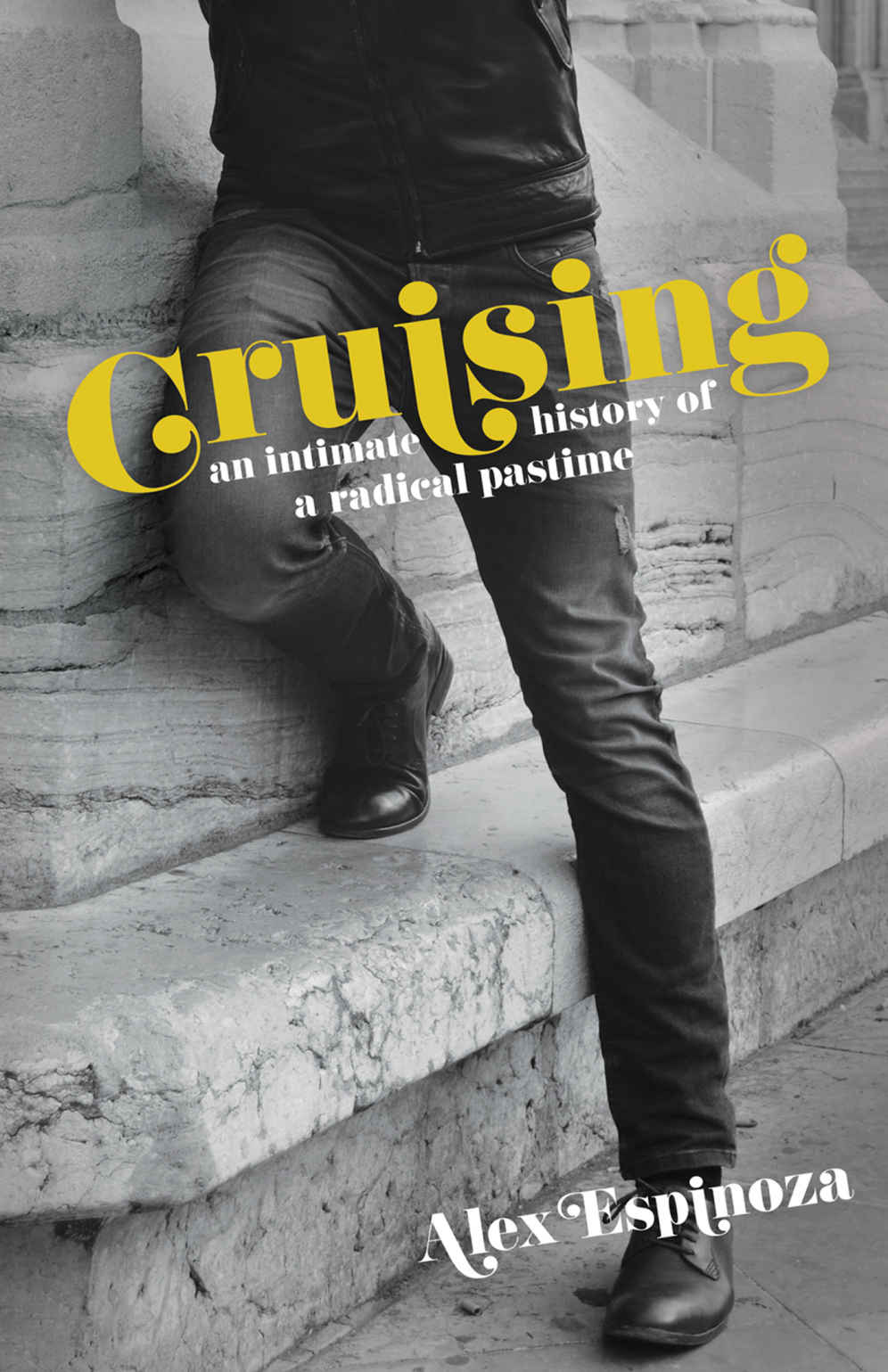
Short Book Review: Cruising by Alex Espinoza
Cruising: An Intimate History of a Radical Pastime, by Alex Espinoza explores homosexual perspectives of “cruising” across time and cultures while interwinding the authors’ own personal narrative. Espinoza provides historical backgrounds from various countries (America, Russia, Uganda) and cross-cultural intersections of growing up in a hyper-masculine and patriarchal society. He includes personal accounts, through interviews, to describe how gay men have found one another to engage in sexual relations over the centuries and the repercussions of being caught and exposed. The book takes a look at many topics including the language used, the secretive nature of a culture that is hidden in plain sight, the reactions to exposure during critical periods, the policing of the pastime over the years, the affects of the HIV/AIDS epidemic in the ‘80s, and how the modern influence of the Internet has changed the pastime. Additionally, one significant aspect that Espinoza includes is his attempt to explain the difference of homosexual non-normative perspective towards sexual relations compared to the heterosexual normative perspective. (I say “attempt” because it is up to the reader to be open to receiving the message and being a heterosexual that is open to non-normative perspectives, I still struggled with relating to this perspective on a fundamental level; not that I disagree with it)
I would definitely consider using this book, under the right circumstances. It is geared towards a mature adult audience and would require a high intermediate to advanced English level to adequately explore the language and references used. It offers a look into a sub-culture that is often repressed and misunderstood by the normative culture. It explores the LGBTQ community in various cultures and provides narrative accounts as well as historical references that can be analyzed. The book may be long (220 pages) for English language learners but each of the twelve chapters could be read independently. I would probably start with the first chapter, “Origins” which provides an explanation of the term “cruising” from historical and linguistic perspectives and the cinematic introduction of the culture to the mainstream public.
The narrative considers how the unaccepted in society are accepted under certain conditions and this can serve as an entry to discuss prejudices at many levels. Students can discuss attitudes towards the LGBTQ communities within their own cultures and how perspectives have changed over time. They can also share personal accounts.
This book can provide a platform to launch dialogue to increase awareness and discuss various human rights issues affecting vulnerable communities. In addition to looking at a historical perspective, it can help students explore and understand social justice implications and issues present in their own communities today. Chapter 10, “Russia, Uganda, and Cruising the World” provides a glimpse into the legality of homosexuality in anti-gay countries and the dire and often life-threatening circumstances LGBTQ communities and activists face. This can lead to a serious examination of the issues closeted gays face and discussions and possibly proactive negotiations for peaceful inclusion in the future.
Espinoza, A. (2019). Cruising: an intimate history of a radical pastime. Los Angeles, CA: The Unnamed Press.


Thanks so much for sharing about this book Jeanne! It reminded me a lot about the term “hybrid masculinity” which is basically the idea that a person might take some identities from hegemonic masculinities and others from more feminine discourses. In some of the research that I have read, hybrid masculinities are seen as negative because they “steal” the voice from marginalized groups and use it in conjunction with a masculine discourse to gain power. Not sure if I explained this well enough. I’d be happy to look up the exact paragraph and share with you.
I also just read a news article about the Horizontals, a vegan, LGBTQ+, anarchist group in St. Petersburg Russia. If you are interested in learning more about this group, check out my post in the news section of the website 🙂
Thanks again for sharing this resource with us!
Hi Kalina, Thanks for the information. I’ll definitely check it out. I wasn’t familiar with the term “hybrid masculinity.” Thanks! 🙂
Hi Kalina, yes, could you please share the resource and the paragraph as well? I am curious..
Hi Jeanne,
Good reflection! Interesting book!
Could you clarify what cruising refers to in this context for those who may not be familiar with the term – and also how cruising is adopted to refer to the journey the author is taking us on?
Also, you said:
I still struggled with relating to this perspective on a fundamental level; not that I disagree with it.
I would like to hear more on this!
Cruising refers to the act of looking for and engaging in sexual hook-ups that are basically transient sexual interactions with strangers. The process of seeking someone to hook-up with can be time consuming and include long periods of waiting often in secretly known (to the community) locations such as particular public bathrooms or hotels. Nowadays locations are posted online whereas in the past there were secret publications of listed locations included in pocket-books for large cities such as LA, NY, Chicago, etc. For example, here is a link with hook-up locations here in Monterey: https://www.cruisinggays.com/monterey/c/areas/
The author talks about his and other’s experiences cruising in the gay community and also compares the word “cruising” in this context to his cultural experiences of cruising in southern California, which I remember being more popular when I was a child. Basically, guys (and sometimes girls, as well) usually in their teens and twenties would cruise (drive around slowly, circling a local area) displaying their vehicle, music, and clothing to be seen and see who else is driving around. They sometimes interact with each other as they drive past one another. The author looks at a historical and cross-cultural perspective of how cruising is a part of the gay community, how it has changed over time, and how the policing of the activity represses and attacks the community.
It’s difficult to explain my meaning about the comment about relating to the act of cruising. The author was attempting to explain how the homosexaual transient nature is distinctly different to the heterosexual concepts and practices regarding sexual relationships.
Hi Jeanne!! This book sounds really interesting and relevant. I am definitely putting it on my list. I was wondering, you said you might use this book “under the right circumstances”. I wanted to know, what type of circumstances would you consider appropriate for this? Other than age, what things do you take into consideration when picking material? Would you choose a book like this if you knew there was a homophobic person in the class or a person who identifies as LGBTQ themselves?
I’m always thinking about when we should and should not use content.
Hi Kate, 🙂 To answer your question, I would use this, as I said for a college/adult level and and appropriate high-intermediate to advanced language level, but I also meant I’d use it if it could be realistically fit into the lesson as relevant content. Yes, I would use this book regardless of the students sexual identities and even if a student has a homophobic disposition. I assume that I would plan ahead to include this in my syllabus if I were to use it and if a homophobic person was adamantly opposed to reading it and discussing the content they are welcome to drop the course. Hopefully though, I would meet with them to discuss their opposition before they decide to change to a different course and convince them to be open-minded to the material and reassure them they would have a voice in the class as long as it is conducive to a positive learning environment for all students. (I know my sister-in-law has dealt with similar situations in the past; I’ll call her and ask her how she handled it.)
Bandar Togel Terpercaya, Slot Teraman Rekomendasi Para Bintang Player Taruhan Online Dengan Hadiah Melimpah Anti Rungkat
rusa4d
kijangtoto
rusa4d
kijang toto
kijangtoto
This book empowered me to raise awareness and better understand the challenges faced by vulnerable communities, ultimately paving the way for positive changes.