
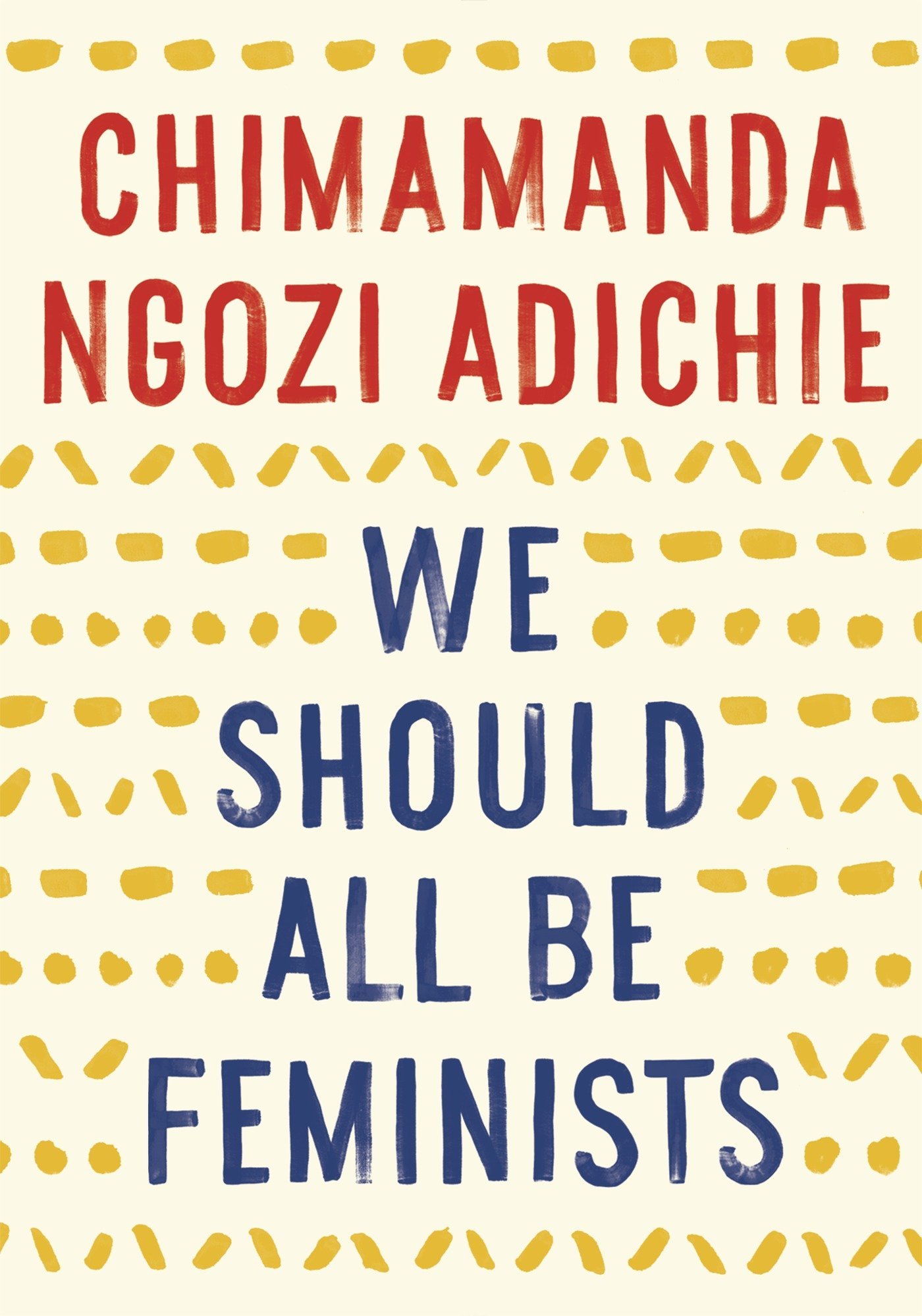
Short book reflection: We should all be feminists
This book, written by a Nigerian author, Chimamanda Ngozi Adichie, is a short essay about feminism. She gives examples of gender discrimination from her own experiences (i.e. She couldn’t be a class monitor, The restaurant waiter ignored her, etc.) and makes a point that both men and women must raise children differently to achieve a fairer world full of happiness. Instead of teaching children how they should be and imposing particular gender expectations on them, Chimamanda suggests that we should recognize how they are and focus more on their abilities and interest. The change in our attitude or mindset about gender is more important than the change in the policy or law.
I think I can definitely use this book for high school learners in my classes, because it is short and accessible in terms of the reading level. When we read a textbook chapter about a successful female person, etc., I can use this book as additional reading materials. I would probably assign this book for homework, dividing it into two parts (p.7-25, 26-48). The first part is more about the author’s personal experiences and the second part is more about her advice of how to raise children differently. After reading each part, I would ask them to come up with one thing they found interesting/surprising/connected to the main textbook and be ready to discuss it in the class.
There are several discussion points in the book. I could ask some reading comprehension questions and more personal questions about their experiences during the class.
1. What is the problem the author experienced? Have you ever had/seen/heard of similar experiences? Have you ever been treated unfairly because of your gender? (p.11-13)
2. The author says that we should raise children differently. In what specific ways should we do so? (p. 25)
3. The author says that the gender problem lies in focusing too much on how we should be rather than how we are. What are some of the gender expectations you feel/felt from your parents, teachers, friends, etc.? (p. 34)
I can see concepts of gender inequality reflected in many examples of this book. For example, Chimamanda talks about how boys are taught to always pay money (which gives them a false impression that masculinity is associated with money) and how girls are taught to be likable among boys or get married to men for status benefits (which gives them a false impression that being unmarried is a personal failure). I somehow associated these false impressions with “hidden curriculum” we learned in our class, because they could be something children learn implicitly from the way teachers and parents treat boys and girls (without intentions). These unconsciously learned beliefs or expectations are difficult to be unlearned, so that’s why we need to change the way we educate children and promote this awareness of gender equality from the early stages.


Hi Mari,
I agree with you that “These unconsciously learned beliefs or expectations are difficult to be unlearned” and even sometimes I find myself making gender stereotypes or making assumptions about the gender identity of a person based on the way they write and express themselves in writing even though I have no idea who they are. Very important to step back and reflect on these moments when they happen.
I also like your essential questions- especially the third one!
Last one, Chimamanda has a TED talk and this book is actually the write-up of it, so you can use the same text for both listening and reading purposes. Here it is: https://www.ted.com/talks/chimamanda_ngozi_adichie_we_should_all_be_feminists